The lunar calendar is one of the oldest planning tools in Chinese culture, and it still works well for modern life. You do not need to believe in astrology to use it. You only need to accept one practical idea: natural cycles create real rhythm, and planning with rhythm is easier than planning against it.
Lunar Months vs. Solar Months
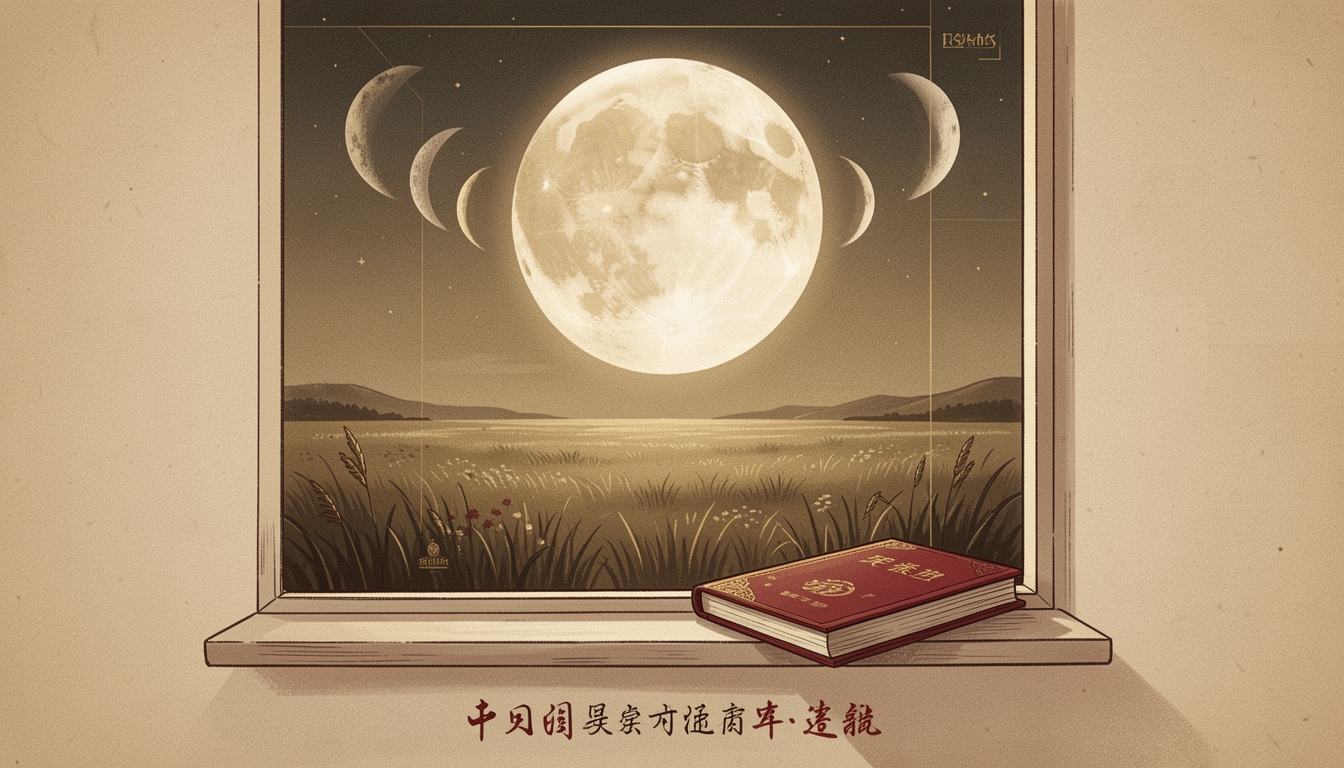
The lunar calendar follows the moon's cycle of roughly 29.5 days. Each month begins with a new moon and reaches its midpoint at the full moon. Solar calendars, by contrast, follow the sun and stay fixed to the seasons. Chinese traditional practice uses both: lunar phases for shorter rhythms and solar terms for seasonal ones.
For planning, the distinction matters less than the rhythm. Knowing whether the moon is waxing, full, waning, or new gives you a simple language for expansion and contraction.
Simple Moon-Phase Planning
A practical method requires no calculation. During the waxing phase, favor starting things: new projects, proposals, first conversations. At the full moon, favor clarity and completion: reviews, launches, and honest feedback. During the waning phase, favor release: decluttering, editing, winding down, and ending what no longer works. At the new moon, favor quiet planning and intention-setting.
These are not rules. They are reminders that energy naturally rises and falls. Matching tasks to phases often reduces resistance.
Add Seasonal Notes From the Solar Terms
Chinese tradition also divides the year into 24 solar terms, which mark seasonal shifts with surprising precision. Around the beginning of spring, for example, many people naturally feel a pull toward new growth. In early winter, activity tends to contract. You can use these shifts as natural checkpoints: review goals at the seasonal boundaries and adjust the pace of the coming quarter.
A light practice is enough. Pick two or three checkpoints per season and ask what is expanding, what is finishing, and what needs support.
Keep It Practical
The calendar becomes useful when it stays in the background. It should never add pressure. If a waning phase arrives and an urgent launch cannot wait, launch anyway. The calendar is a lens, not a lock. Use it to notice rhythm, then make your own call.
FAQ
Do I need special software to follow lunar phases?
No. A moon phase app or a simple online lunar calendar is enough for everyday planning.
Is lunar planning based on superstition?
It is based on observable rhythm and centuries of cultural observation. How much weight you give it is your choice.
What should I read next?
Read Daily Chinese Astrology Guidance Without Superstition for a broader practice.
Where to Go Next
Continue with Daily Chinese Astrology Guidance Without Superstition, explore the daily guidance section, or browse all articles.